Immersive technology often gets judged by how impressive it feels. Bigger worlds. Stronger effects. More realism. More “wow”.
For museums, memorials and cultural institutions, that is not enough. The real question is whether XR can earn trust.
This is especially relevant for museums, memorials and heritage organisations, where adoption depends on trust, care and educational value..
This matters most when the subject is difficult history. A memorial experience cannot treat fear, escape, loss or political violence as scenic material. Curators and educators need immersive media to bring people closer to history without making it feel like entertainment.
That is what makes the PRESENCE Cultural Heritage use case around Tunnel 57 important. It is a test of how XR can support memory, interpretation and emotional understanding while staying grounded in historical truth.
The PRESENCE Cultural Heritage demonstrator combines spatial reconstruction, haptics and witness-based storytelling to support understanding without turning history into spectacle.
Why restraint matters
Museums have a responsibility to preserve and communicate heritage with care. They need to protect context, authenticity, nuance and trust. In cultural heritage, more interaction does not automatically create better learning. More realism does not automatically create more truth. More intensity does not automatically create more meaning.
A virtual reconstruction becomes credible when it is built from evidence, shaped by interpretation and handled with sensitivity. This is especially important for Tunnel 57, where the story is not abstract. It is about real people, real risk and a real escape under the Berlin Wall.
Tunnel 57 as a careful encounter with history
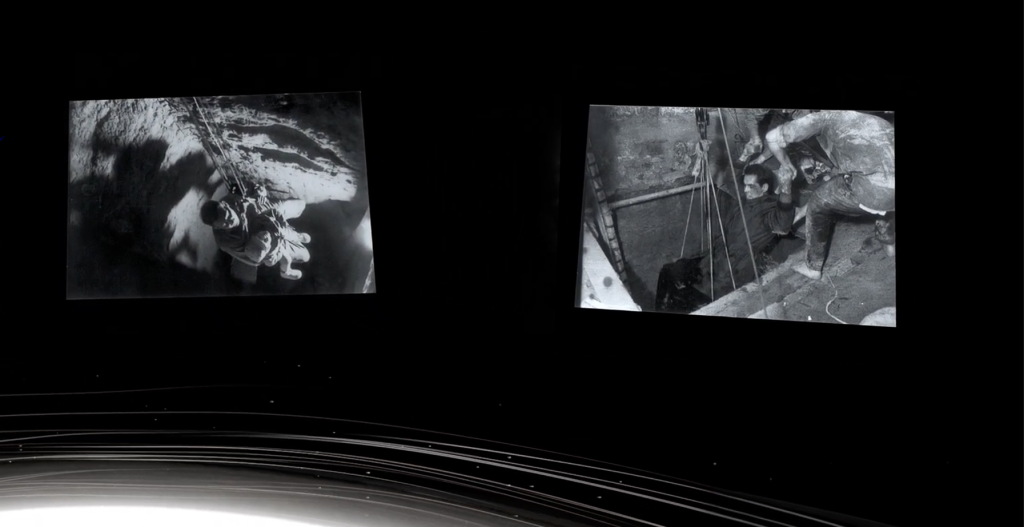
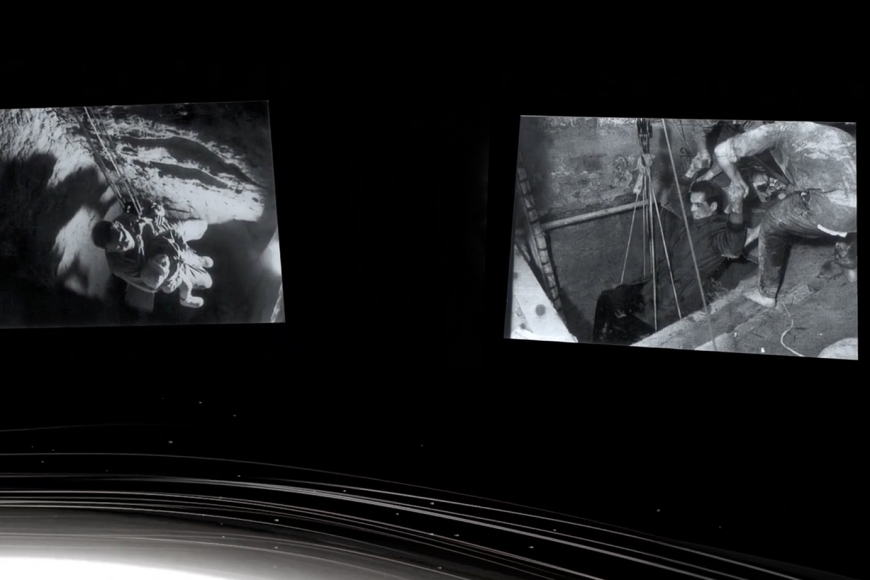
Tunnel 57 reconstructs an escape that took place in October 1964. Visitors enter a confined, photorealistic version of the 145 metre tunnel, a space roughly 90 centimetres high and 60 centimetres wide. The experience brings together reconstructed environments, archival media and first person testimony to place users inside the physical and emotional conditions of escape.
The aim is not to let visitors play through this history. The aim is to help them encounter it with attention.
The experience is built around a high fidelity digital twin of the Tunnel 57 site, created through photogrammetry and volumetric scans. It also includes a scanned, rigged time witness, Burkhard Veigel. His presence anchors the experience in lived memory instead of fictional narration.
That choice matters. XR can invent almost anything. Using a real witness is a way of setting limits. It tells the visitor that this is not fantasy. It is a recreation with sources, people and consequences.
Haptics with purpose
Haptics can easily become a gimmick. A vibration here, a buzz there, a quick effect to make something feel more exciting. Tunnel 57 uses touch in a more thoughtful way.
The haptic vest and gloves communicate tunnel tightness and resistance during key interactions. The pressure of the vest hints at confinement. Resistance in the gloves makes digging feel effortful instead of symbolic. The body becomes part of the interpretation.
This does not turn the experience into a game. It makes the physical reality of escape harder to treat as an idea on a screen.
Creating space to think
One of the strongest parts of Tunnel 57 is its pacing. The visitor is not encouraged to rush from one action to the next. The experience uses narration, archival material, sound and silence to create moments of attention.
Archival images appear as evidence. A sombre voice gives historical context. Urgent audio cues bring tension into the scene. Personal details such as photographs, belongings, love, separation and risk move the story away from abstract history and toward human consequence.
A good cultural XR experience should ask what the visitor needs to understand, not only what the visitor can do.
What early testing showed
The hubraum Vision Xperience test gave useful early signals. On 24 February 2026, 15 participants tried the Tunnel 57 demonstrator in a semi-public setting. The strongest responses centred on embodied and narrative moments. People reacted to crouching through the tunnel, digging, feeling haptic feedback and encountering the elderly eyewitness.
The test also showed what still needs work. Onboarding has to be clearer, especially for visitors who are less familiar with headsets and haptic hardware. Haptic feedback needs careful tuning so it feels meaningful and comfortable. The storytelling also needs the right rhythm. Witness led content can be powerful, but too much information at once can overwhelm visitors.
The lesson is simple. Immersion is not the final goal, meaningful interpretation is.
Why this matters for adoption
For cultural institutions, the adoption case for PRESENCE depends on trust. Museums do not need technology that feels spectacular but is difficult to run, hard to explain or disconnected from curatorial purpose.
They need experiences that can be introduced clearly, operated realistically and justified educationally. PRESENCE is strongest when it helps visitors move from passive consumption toward active, embodied understanding. Tunnel 57 shows how that can happen when haptics, spatial reconstruction and witness based storytelling serve the historical material.
What comes next
The next step is to make Tunnel 57 more precise. That means clearer onboarding, refined haptic profiles, stronger pacing and further testing with visitors and cultural heritage professionals.
Tunnel 57 is one place, one story and one emotional register. The wider principle can travel further. Cultural XR earns trust when it starts with significance, uses sources carefully, respects sensitivity, reduces friction for visitors and measures real value over time.
The future of immersive heritage will not belong to the loudest technology. It will belong to experiences that use presence to deepen attention and protect meaning.