Who is this relevant for?
This work is particularly relevant for:
- Healthcare professionals and care organisations exploring digital well-being solutions
- User decision-makers evaluating innovation in patient experience and remote care
- Business developers looking at scalable XR applications in healthcare
Context
Healthcare environments are increasingly distributed. Patients are often separated from family members, and care professionals rely more on remote communication tools to provide support and consultation.
While video calls have become standard, they fall short in one crucial aspect: they do not recreate the feeling of being together. This limitation affects:
- emotional connection between patients and relatives
- the level of trust in remote consultations
- the overall quality of patient experience
In parallel, Virtual Reality has already proven effective for relaxation and stress reduction, but these experiences are typically individual and isolated, limiting their broader impact in care settings.
The key challenge is therefore:
How can immersive technologies move beyond individual experiences and support shared, meaningful presence in healthcare?
How PRESENCE Was Used
Within the PRESENCE project, SyncVR Medical explored how Social XR can be applied in therapeutic and clinical contexts, extending existing VR relaxation solutions into shared environments.
This work is currently being developed through:
- demonstrators and prototype environments
- integration of PRESENCE components into existing VR therapy workflows
- early-stage validation discussions with healthcare stakeholders
Three PRESENCE technologies are central to this use case:
Holoportation
Enables a remote person to appear as a life-size, volumetric presence within the virtual environment. In a healthcare context, this can allow patients to interact with family members in a more natural and spatial way compared to video calls.
Haptic systems
Introduce the possibility of adding tactile feedback to immersive experiences. In relaxation or therapy scenarios, this can enhance engagement and create a stronger sense of physical interaction.
Intelligent virtual humans
Support natural communication through speech, facial expressions, and responsive behaviour. These can be used to guide sessions, assist patients, or complement interactions with real people.
Use Case
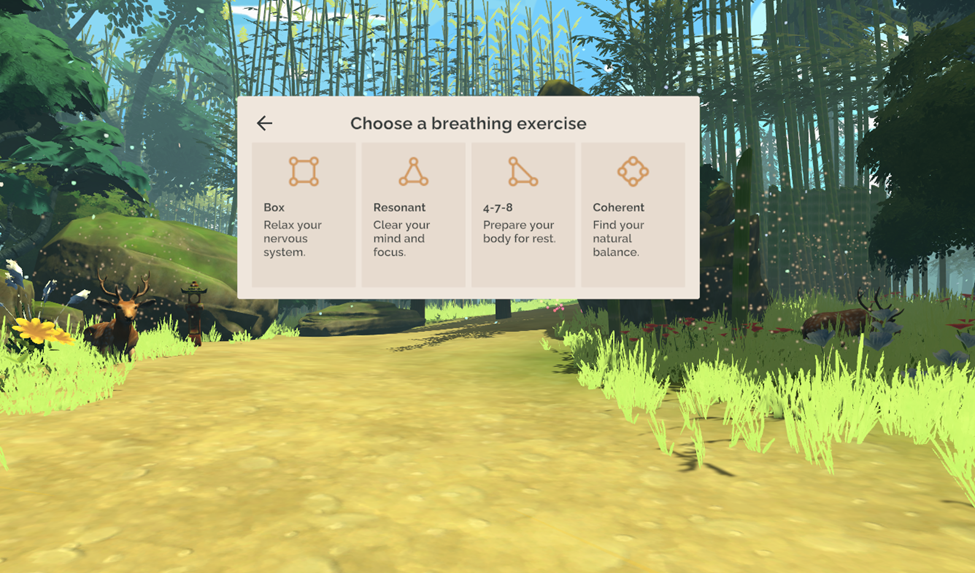
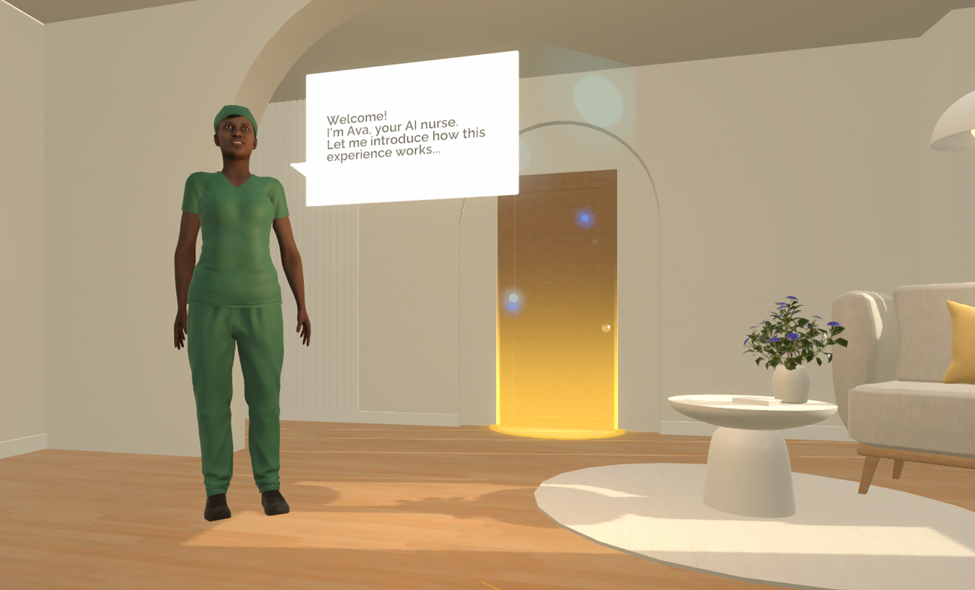
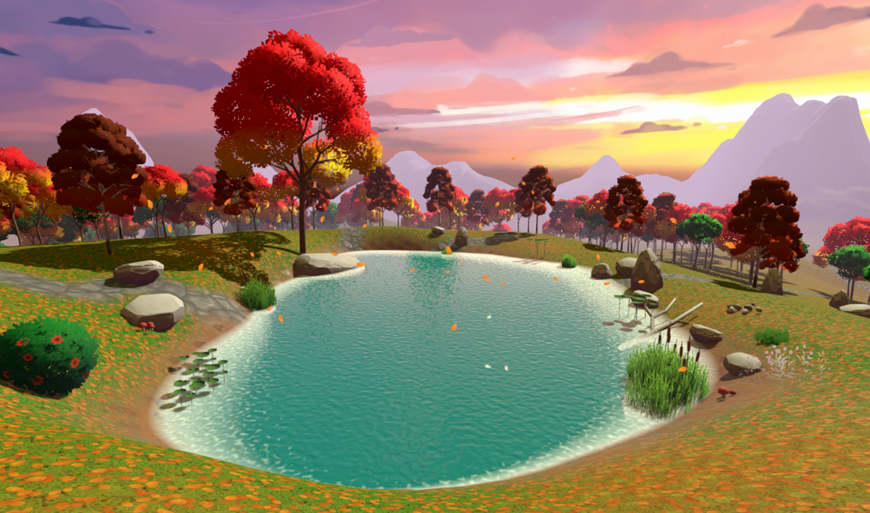
SyncVR Medical developed a relaxation environment where a patient can visualize and interact with a family member through high-fidelity holoportation. To enhance the therapeutic effect, a haptic glove and cushion are integrated to physically guide the patient’s breathing rhythm, synchronizing tactile feedback with the immersive scene. The experience further incorporates Intelligent Virtual Humans (IVHs) to serve as digital tutors or companions, providing multimodal support and empathetic engagement throughout the session. These virtual agents ensure continuous assistance, guiding the patient through relaxation techniques.
This setup moves beyond traditional practice by providing spatial depth and physical cues that standard video calls or isolated VR experiences lack. Key challenges identified during integration included managing the technical complexity of synchronizing volumetric streams with haptic hardware while maintaining the low latency required for a natural sense of co-presence.
What We Learned
Although still in development, several early insights are emerging from SyncVR’s work within PRESENCE:
What worked well
- The transition from individual VR to shared immersive environments is highly intuitive for users
- The concept of “being together in VR” resonates strongly with healthcare stakeholders
- Combining relaxation with social interaction increases perceived value of XR solutions
What still needs improvement
- Technical complexity of integrating multiple components (XR + haptics + volumetric capture)
- Usability challenges in clinical environments where simplicity is critical
- Hardware constraints, especially for scalable deployment in hospitals
What surprised us
- The importance of emotional realism over visual realism
- Even partial improvements in emotional presence (not full photorealism) were noticed
- Healthcare professionals are open to XR, but require clear integration into workflows
User interactions with medical professionals (doctors and nurses) confirmed that while the technology is impressive, its success depends on a frictionless fit into clinical routines. Clinicians provided feedback that the breathing synchronization via haptics felt more “grounding” than purely visual instructions.
However, testing also revealed that hardware setup time must be significantly reduced for hospital use. Compared to the baseline of standard video calls, the spatial coherence of holoportation allowed for more natural non-verbal communication, which participants felt increased the emotional quality of the interaction.
Why This Matters
For adoption, the key question is not whether XR is impressive — but whether it is usable, valuable, and scalable in real-world care settings.
This use case demonstrates that PRESENCE can:
- enhance remote human connection, not just communication
- extend VR from individual therapy to shared experiences
- support patient well-being and emotional care, not just clinical outcomes
For decision-makers, this translates into:
- improved patient satisfaction and engagement
- new forms of digital care delivery
- potential differentiation in healthcare services
For business developers, it highlights:
- a clear use-case fit in healthcare
- opportunities for service-based models (XR therapy, remote care tools)
- pathways for integration with existing healthcare solutions
Value Demonstrated
The value demonstrated to date is the restoration of spatial cues, such as body orientation and interpersonal distance, which are lost in 2D video. This creates a measurable shift in communication patterns, moving from “watching a screen” to “sharing a space,” which we believe will lead to higher patient engagement and improved emotional well-being outcomes.
What’s Next
The next phase of this work will focus on:
- further integration of PRESENCE components into operational environments
- validation with healthcare professionals and patients
- refinement of usability and deployment models
- exploration of scaling pathways across healthcare organisations
In addition, future work will aim to better understand:
- how much realism is required for meaningful presence
- which components deliver the highest value in practice
- how Social XR can be embedded into daily care workflows
Next Steps towards Adoption
Next steps involve planned clinical pilot trials e.g. in hospital wards to test the relaxation environment under real-world conditions. The target healthcare segments include chronic care and post-operative recovery, where patient isolation is a high-impact factor. To move from prototype to deployment, the focus for late 2026 will be on finalizing the integration of the unified project APIs and ensuring ethical and data management frameworks are fully validated for healthcare data privacy.
Conclusion
SyncVR Medical’s work in PRESENCE highlights a critical shift: from immersive technology as a tool for individual experience to a platform for shared human connection.
While challenges remain in integration and scalability, early results suggest that Social XR can play a meaningful role in healthcare — not by replacing existing tools, but by enhancing the human dimension of care.